PVC laser marking, PVC cable laser engraving, PVC sheet laser marking, PVC laser marking powder — these are critical processes in the plastics industry, yet most manufacturers face persistent challenges with fuzzy marks, yellowing, carbonization, and low QR code readability.
PVC cable insulation, packaging sheets, and rigid PVC decorative sheets are among the highest-volume materials in the industry. However, common pain points include blurry text edges, burnt yellow borders, poor scan rates for 2D codes, and extrusion defects such as granules, delamination, or surface peeling when using standard additives.
The root cause lies in PVC’s narrow processing window (160–185°C). Conventional PE carrier laser masterbatches require temperatures above 180°C, creating thermal and polarity conflicts that make them unsuitable for PVC extrusion, calendering, or pelletizing lines.
This comprehensive guide, based on real-world cable and sheet production experience, breaks down the full PVC laser marking quality improvement solution. It covers additive selection logic, process optimization, and a detailed comparison between PE carrier masterbatches and carrier-free powders. The recommended solution is DOME MATERIALS DM-PW0026 — a high-performance, carrier-free PVC laser marking powder that serves as an excellent, cost-effective alternative to Iriotec 8825.
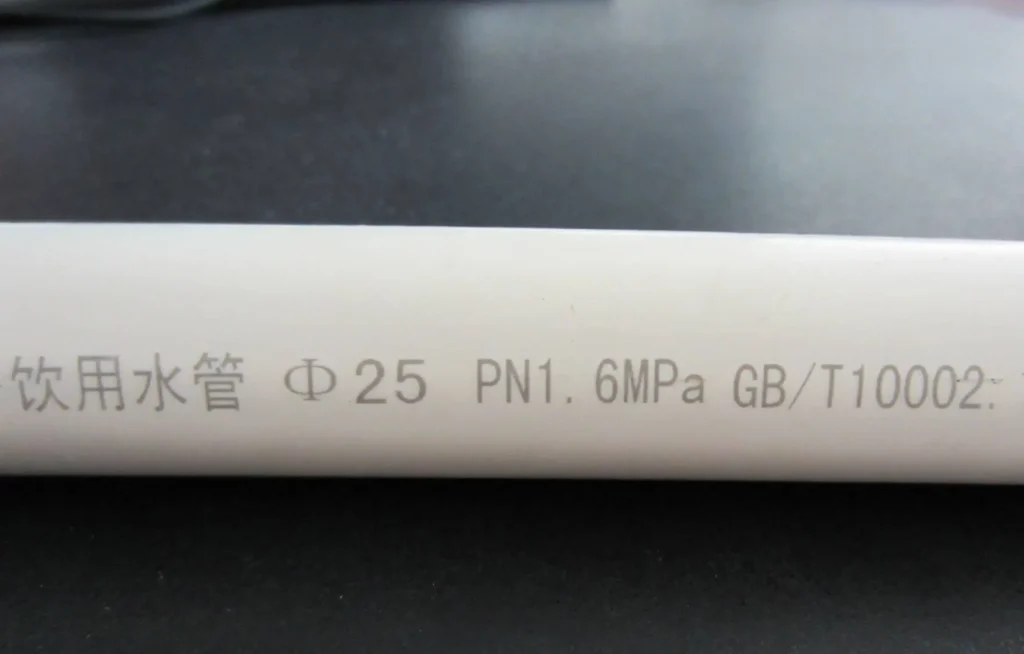
1. Core Challenges in PVC Laser Marking (Cable & Sheet Applications)
1.1 Material Limitations: Poor Heat Resistance Leads to Yellowing and Carbonization
PVC decomposes rapidly above 190°C, releasing HCl. Laser-induced localized high temperatures easily cause carbonization, yellowing, bubbles, and rough surfaces.
- Soft PVC Cables (30–60 PHR plasticizer): Blurry edges, bubbles, and QR code scan rates often below 60%.
- PVC Sheets (rigid or semi-rigid): Hazy white marks on transparent sheets and inconsistent depth/color on pigmented sheets.
1.2 Fatal Additive Selection Error: PE Carrier Laser Masterbatches Are Unsuitable for PVC
Standard laser masterbatches (such as those with PE carriers) create dual conflicts:
- Temperature Mismatch
PE carriers require ≥180°C to melt fully. Raising the temperature to suit the masterbatch causes PVC degradation, yellowing, brittleness, and reduced mechanical strength. Keeping standard PVC temperatures results in unmelted PE particles, white spots, and delamination. - Polarity Incompatibility
PVC is highly polar (chlorinated); PE is non-polar. This leads to phase separation, agglomeration of active laser-sensitive components, and inconsistent marking across entire production runs. - Higher Costs
Higher addition rates (2–5%) due to heavy carrier content increase long-term raw material expenses.
1.3 Process-Related Pain Points
- Lack of PVC-specific additives → poor contrast on light/transparent grades.
- Incorrect laser wavelength or excessive power → increased carbonization.
- Improper mixing and temperature control → stabilizer failure and accelerated aging.
2. Complete Solution: Switch to Carrier-Free PVC Laser Marking Powder
Recommended Product: DOME MATERIALS DM-PW0026 — a 100% active, carrier-free laser marking powder specially engineered for PVC. It is a direct, high-performance alternative to Iriotec 8825 with 30%+ lower overall cost.
Key Advantages of DM-PW0026
- Excellent Low-Temperature Compatibility: Disperses perfectly at 140–185°C without forcing higher temperatures that degrade PVC. No crystals, delamination, or yellowing.
- Ultra-Low Dosage: Only 0.3–0.5% addition rate, reducing costs while preserving transparency, tensile strength, insulation, and other base properties.
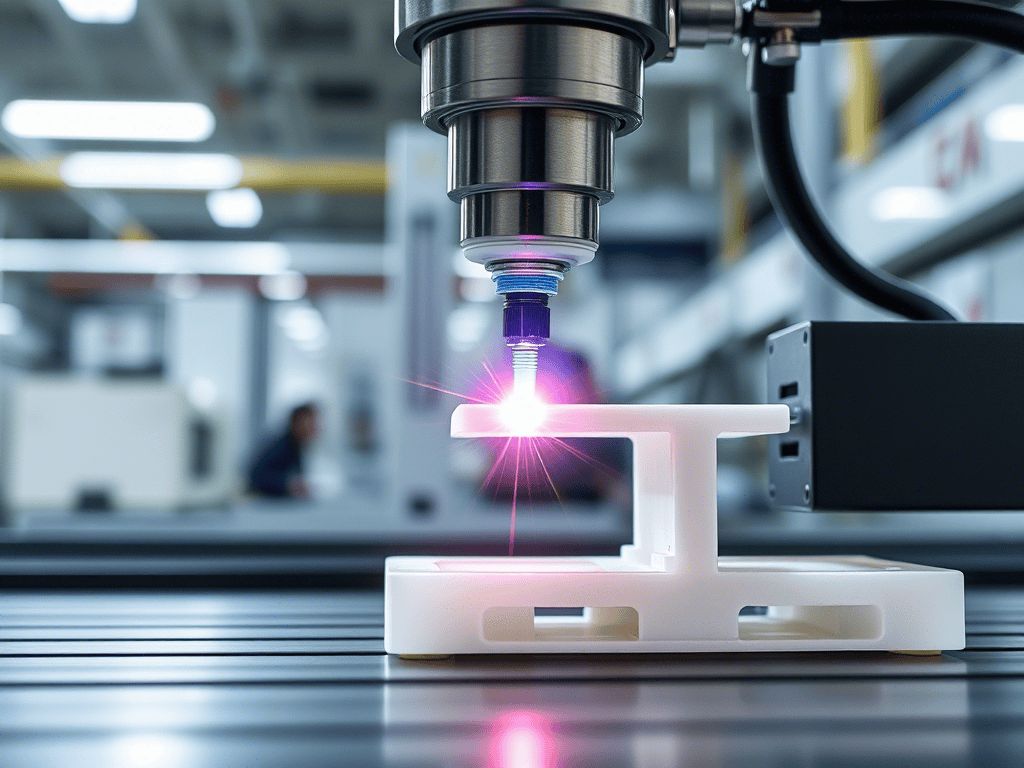
- Broad Laser Compatibility: Works with 355nm UV, 532nm green, and 1064nm fiber lasers. Delivers sharp, high-contrast marks (white on black or black on white) with crisp edges and excellent QR code readability.
- Superior Compatibility: Suitable for soft PVC cables, rigid sheets, transparent films, and highly filled formulations. Works seamlessly with Ca/Zn or tin stabilizers.
3. Process Optimization for Superior Results
3.1 Mixing and Extrusion/Calendering Guidelines
- Mixing: Soft PVC discharge at 90–110°C; rigid PVC at 110–120°C. Cool to below 40°C. Add DM-PW0026 last with low-speed mixing for 3–5 minutes.
- Extrusion Temperatures:
- Soft cable: Barrel 140–170°C, die ≤175°C
- Rigid sheet: Barrel 160–180°C, die ≤185°C
- Maintain strict low-temperature control — never raise temperatures for the additive.
3.2 Laser Equipment and Parameter Optimization
- Wavelength Selection:
- Transparent/precision work: 355nm UV (cold marking, minimal heat damage)
- Black/thick materials: 532nm green (best contrast)
- Cost-sensitive runs: 1064nm fiber with reduced power
- Recommended Parameters (20W reference): Power 15–30%, speed 600–1000 mm/s, frequency 30–50 kHz. Use unidirectional bow-tie filling.
- Install acid fume extraction systems to protect optics from HCl.
4. Turnkey Solutions for Main Applications
Scenario 1: PVC Cable Insulation Online Laser Marking
Add 0.35–0.45% DM-PW0026, extrude at 142–172°C, use 30W UV flying marker.
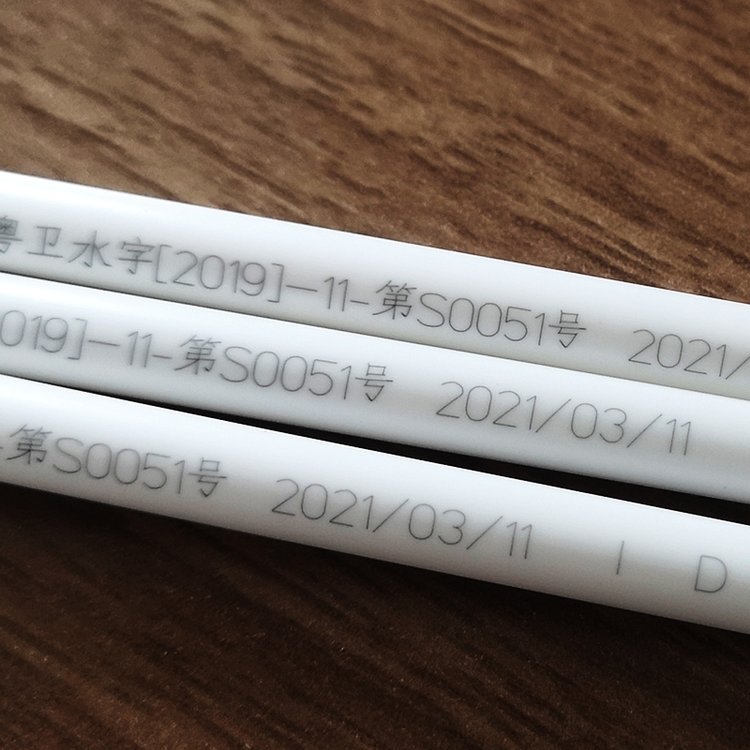
Results: Crisp white markings, clear QR codes, smooth surface, consistent quality across reels.
Scenario 2: Rigid/Transparent PVC Sheet Laser Marking
Add 0.3–0.5% DM-PW0026 (lower for transparent), controlled calendering/extrusion, 532nm green laser.
Results: High-contrast marks without haze or carbonization, no delamination or streaking.
5. FAQ
Q1: Why can’t PE carrier laser masterbatches be used in PVC?
A: Temperature mismatch and polarity incompatibility cause degradation, phase separation, spots, and inconsistent marking. Carrier-free powders like DM-PW0026 are essential.
Q2: Can DM-PW0026 replace Iriotec 8825?
A: Yes. It offers equivalent performance, lower dosage, and better cost-effectiveness for both cable and sheet applications.
Q3: Are dosages different for soft and rigid PVC?
A: Soft/plasticized: 0.3–0.4%; highly filled rigid: 0.4–0.6%; transparent: as low as 0.3%.
Q4: Does the powder affect extrusion flow or transparency?
A: No. The ultra-low dosage and absence of inert carrier preserve original PVC properties.
Q5: I still get yellowing — is changing the additive enough?
A: It is the foundation. Combine with strict temperature control (<185°C) and optimized laser parameters (lower power, faster speed, UV preferred).
Conclusion
Poor PVC laser marking quality is usually caused by using unsuitable PE carrier masterbatches. Switching to DOME MATERIALS DM-PW0026 carrier-free PVC laser marking powder, combined with proper low-temperature processing and laser optimization, delivers sharp, durable, high-contrast marks while reducing costs and scrap rates.
Ready to upgrade your PVC cable or sheet laser marking process? Contact DOME Materials for free samples, formulation support, and customized process parameters.
Keywords: PVC laser marking, PVC cable laser engraving, PVC sheet laser marking, PVC laser marking powder, Iriotec 8825 alternative, DM-PW0026, high-contrast PVC marking.